High Salaried Job V/S Business : Why one is better than the other.

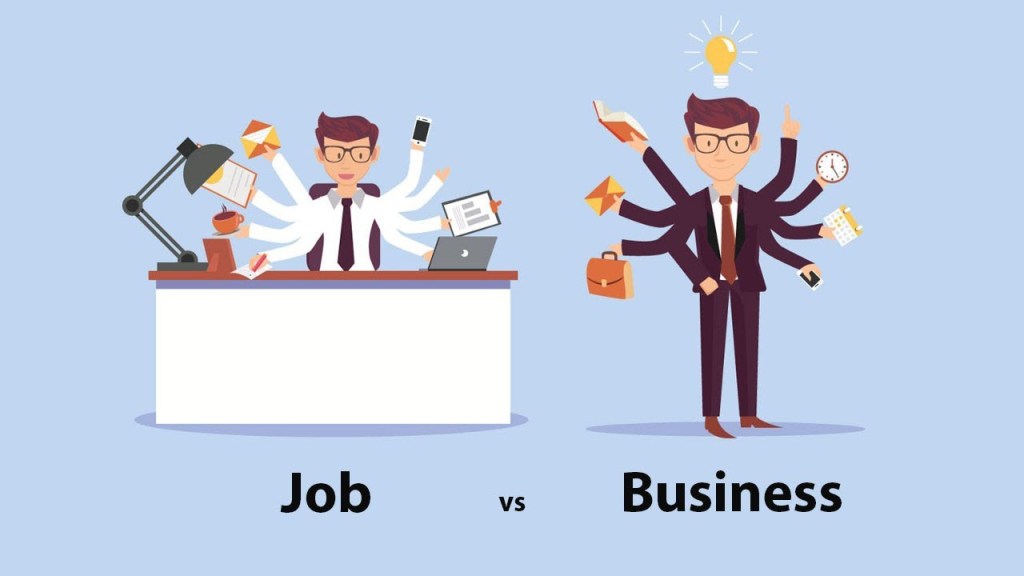
It is kind of a big dilemma in our generation whether to go for a high salaried job or start your business.

Honestly, in my opinion unless you have a family business, one should start with a job, learn the ground rules, play a bit on someone else dollar then scrutinise oneself on grounds of qualities required for running a business (leadership, communication skills, blah blah blah). But this thing will require a post of its own. So let’s just skip this for now.

So, what’s better Business OR High Salaried Job?

In one word BUSINESS. If have a clear idea what is about to come, feel free to skip the post. But if have a doubt please read ahead.

What causes this dilemma?

These days big business are ready to offer  high salaries even houses, transportation, etc. Whereas business has competition. Business brings an air of uncertainty while job offers security (kinda).

Why shouldn’t you get an interview and go for a job?

Because the problem is not exactly earning money. Say What? Yes, earning money is the simple part, the problem comes when TAXES come into the picture.
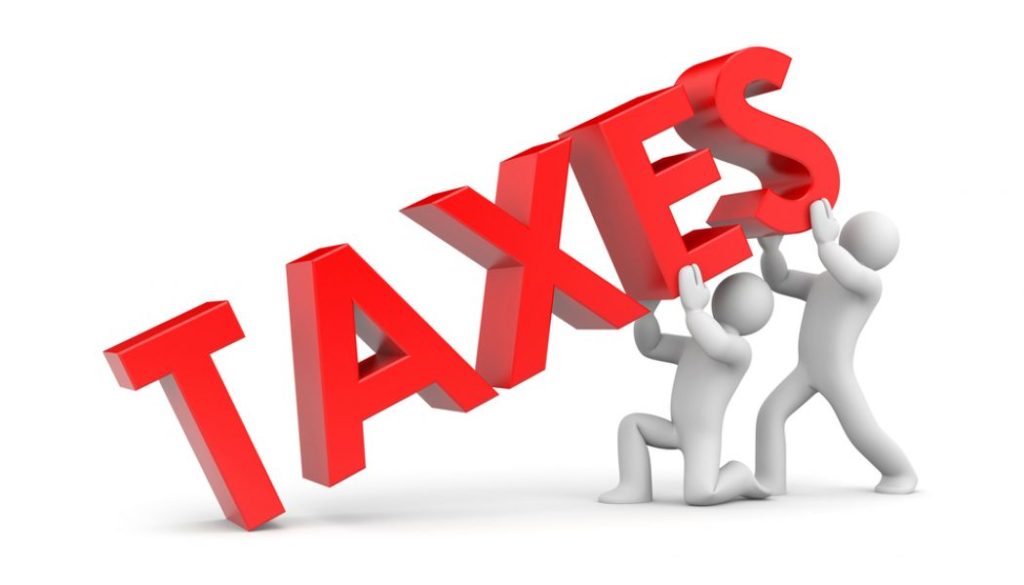
Let’s say you are an employee in USA. Here are the taxes you will have to pay:

  • Federal Income Tax.
  • State Income Tax.
  • Social security Tax.
  • Federal & State Unemployment Tax.
  • Workers compensation Benefit Tax.

This accounts for 20-30 %( depends on the state you work in) deduction in the amount earned. i.e. if you earn a Million dollars you will get to spend only 700,000.

The scenario is more or less similar for self-employed.

But when it comes to business they may not pay even any amount of money in taxes. Example – Amazon.llc paid 0 dollars Taxes in 2018 while also getting 129 millions as rebate from the federal government. (all legally). I.e. if earn a Million you get to keep a Million. Or in this case, get additional money.

WOW! That sounds insane. But why does there exists such inequality?

Let me explain, here’s how government sees it. When you start a business, you provide employment to a lot of people thus, increasing public earning, spending, economy booms, GDP, and pretty much all good things. Hence these nice businesses should be forbided of some taxation. But, when a person gets employed, he/she technically takes somebody’s job (mostly) and they don’t give employment to others hence,they should be taxed more.

How, do businesses pay less to no taxes?

This will be explained in further posts.

 I hope you liked the read, in case you didn’t I am sorry but there is no dislike button, you can always use comments though.

By Bhavik Gandhi  December 28, 2019

Why are Bankers Richer Than You??

The title doesn’t seem like a good question?

Not a 5 star hotel, It is Mauritius Commercial Bank

Let’s consider this, all the money a bank has, comes from its costumers or the central bank(which they have to repay) yet bankers are one of the highest paid individuals in the world, the infrastructure of banks are better than majority of corporations.

Still doesn’t sound amusing?

Let’s say you are the only customer of a bank (hypothetically of course). All the money you earn goes to bank. But, over a peroid of time the bank become richer than you.

WTH

WTH? Why? How?

A bank charges its customers fees for everything( pretty much ) from transactions of huge sums, putting money in various funds( mutual funds, pension funds, etc). taking money out of the funds, online payments fees, etc.

For example – When(if) you go to a bank for investing in a mutual fund, you will be handed a books of hundreds of pages which is filled with complex economical words which look may like a witch’s spell. Here’s a free tip to cut for you through the mud, every time you see the words cost, fees(management fees, transaction fees, etc), (which will be in percentages) this is amount that will be taken from your pocket other than the actual investment. (usually ranges between 20% – 40%)

What does this mean?

This simply means that, even if all your money is lost the bank will still make a good bit depending on the amount of your investment.

  • F.Y.I the total amount in mutual funds in U.S.A alone is $5 Trillion i.e almost 5 times of Pakistan’s G.D.P ($1.202 trillion……Wikipedia).

Moreover there are interests on loans given.

Wow that sounds like a lot income for the banks.

Yes, but that’s not their biggest source of income. (According to me)

The below information is more of my personal theory (so take it with a grain of salt) and there ain’t any official numbers to this.

Let us say you live India, the INFLATION is 8% (quarterly). You keep some amount in a saving account, the interest you get is 0.4% per year (i.e 0.1 per quarter). Congrats you lost 7.9%( 8 – 0.1 =7.9) of your purchasing power every 3 months. If you put the same amount in a fixed deposit with 6% interest(usual rate) per year i.e 1.5% per quarter. You end up losing 6.5%( 8 – 1.5 =6.5) of your purchasing power. Moreover, while you have kept money, the bank gives it to others at interest rates above 12%.

And well, its not just you, there are millions who put their money in the bank.

Before I end this, I want you to think that, even after so many sources of income, how do banks show quarterly losses? Legally.

If you don’t get it. Stay tuned as this will be explain in further posts.

I hope you liked the read, in case you didn’t I am sorry but there is no dislike button, you can always use comments though.

By Bhavik Gandhi  December 12, 2019

Economic Bubble: Why Slow & Steady Wins the Race

Let’s start with some basics here, an economic bubble or asset bubble (sometimes also referred to as a speculative bubble, a market bubble, a price bubble, a financial bubble, a speculative mania, or a balloon) is a situation in which asset prices appear to be based on implausible or inconsistent views about the future.

In simpler words, an economic bubble is formed due to sudden overvaluation of an asset and the later correction in its value.

So, who can make these bubbles?

Anybody, with a lot of capital at their disposal can form a bubble. This may include an individual, a company or even a group of companies who may come together to raise the value of an asset.

What good does a bubble do?

For an economy? Nothing. But for the investors, it means profits and major profits if it doesn’t get squeezed by a bigger investor (don’t know what a squeeze is? Stay tuned for further post).

How?

When a major investor or group of investors purchase a major chunk in an asset (commodity, equities, currencies, etc.) there is a sudden surge in the price of the asset, this surge is further increased by speculators in search for quick profits. When the price of the asset reaches a margin, the investor start selling the asset as rapid pace hence, making profits on their initial investments hence, bursting the bubble.

A simple recent example of bubble would be ‘BITCOIN’

BUBBLE OF BITCOIN

Here’s what the timeline of this bubble looked like:

  • December 17, 2017: bitcoin’s price briefly reaches its all time high of $19,783.06.
  • December 22, 2017, bitcoin fell below $11,000, a fall of 45% from its peak.
  • November 15, 2018, Bitcoin’s market capitalisation fell below $100 billion for the first time since October 2017 and the price of Bitcoin fell to $5,500. (Wikipedia)

F.Y.I in case you didn’t know the recession of 2008 was due to housing market bubble, where the prices of houses and their loans busted.

 I hope you liked the read, in case you didn’t I am sorry but there is no dislike button, you can always use comments though.

By Bhavik Gandhi       December 19, 2019

Economy & Stock Market: A Relationship that’s Always on the Rocks

What is stock market?

A stock market, equity market or share market is the aggregation of buyers and sellers of stocks, which represent ownership claims on businesses; these may include securities listed on a public stock market. Wikipedia.

In, other words the stock market helps investors to invest their capital in equities of companies they think will perform well. This investor may include any common person, a banker, a business man(or woman),or an international investment company, etc. There by helping the company in its endeavours.  

Whats the relation of Stock market with the Economy?

In an ideal world the stock market should be a clear representation of the economy. That is, when the general economy goes south the stock market should also go south and vice-verse.

But does it?

Not always, since we don’t live in an ideal world (sadly). The numbers of a stock market are not that reliable. The general economy of a country may be suffering a down turn ( i.e lack of business for majority of the population ) but the stock market may be at all time high. If you this resonating with India’s economy in December 19 (time of writing) then you won’t be wrong.

So when do their stars align?

Lets consider this,

A man takes his dog for a walk in a park. The dog is on a leash. The man walks straight, dog goes left and right but it still walks with the man.

One can say the man is like the economy and the dog is like the stock market. Howsoever the stock market fluctuates, in the end it has to walk along with the economy.

Why did the stock market go up in the first place, even at economy’s lows?

When the general business is low, people start to look elsewhere for quick and easy returns. Stock market is always a very attractive bet for such individuals and when this happens, all the money gets pulled out of the real markets and gets poured into stock market making the economy go down and stock prices to go up.

Hence, even if the stock market is at high and economy is at low, the stock market will return to low as well (eventually).

Honestly I can’t think of anything more for this blog. I hope you liked the read, in case you didn’t I am sorry but there is no dislike button, you can always use comments though.

By Bhavik Gandhi         December 18, 2019

Credit Explained: The Cost of Promises

We all love to buy new things, sometimes we pay in cash sometimes with a debit card. What if you fall short of money, but you really like that thing? You take out your credit card and swipe it, type the password and TADA!! You just bought something you didn’t have the money for.

Today, lets take a small dive into the workings of credit.

In very simple words Credit is a promise. Its a promise you make to the bank that, even though you don’t have the money right now, you will pay the money later. The bank charges you with some interest for providing this service.

Let’s say you are out to buy a furniture set for your new house. Suppose, you fall short of a 1000 dollars, so ask for credit, making a promise that you will pay 1100 dollars later (A.K.A Debt). The credit is received and you bought your dream furniture. Sound’s all right? Here’s a catch, you just paid 100 dollars extra and your furniture will not make you those 100 dollars (usually). Moreover, you have taxes to pay over it (the amount of tax feels small in this case but in a bigger scenario it becomes rather respectable).

Here’s a different example. Let’s say your monthly salary is 50000 dollars, you take an additionally credit of 10000 dollars this makes your buying capacity as 60000 dollars for the month. Suppose, you do this for 12 months (2019 – 2020). Then you will have to spend 10000 every month making your monthly buying capacity to 40000 (50000-10000 = 40000) for the year 2020 – 2021. Plus there are always taxes to make things worse. In other words, you will have to cut your standard of living.

So, is Credit bad?

Yes, if you misuse it. Let’s say you are a Youtuber buying a new desktop will increase your productivity, intern making you money. Then your use of credit is justified for buying that desktop. The same applies for a industrialist buying a new machinery, doctors buying new equipment, blah blah blah. You get the idea right?

Hence, as a general rule of thumb, I will suggest you to take credit only for something that’s going to pay you back.

With this in mind I would want you to think what are some bad credit choices you made in the past?

What about me? None, I never had a credit card.

 I hope you liked the read, in case you didn’t I am sorry but there is no dislike button, you can always use comments though.

By Bhavik Gandhi   December 17, 2019.       

The Downside of Inflation and The Need for Nominal GDP

Before we begin I hope you had a read about the previous 2 blogs on the page. If not and you are interested to get confused I’ll suggest that you continue reading. We know that Inflation is a way of showing growth and why is it so important.

But does this mean really mean growth for the common people?

A short answer will be ‘NOT EXACTLY’. High rate of Inflation will lead to poverty but a nominal rate will not. In a countries like India & China where the rate of Inflation is around 8% the standard of living of a common man does not increase by 8% causing problems. Moreover, everyone has to spare extra 8% while buying anything. This scenario stands true for both working as well as business class of people.

But that’s just about India & China, what about other countries?

In a general rather than aiming for an Inflation as aggressive as 8%, majority countries prefer to keep it down to 4%.

But, isn’t this cheating? They show growth while people are suffering.

Yes, in a short span Inflation feels good but it hits you in the back in a long run. As people begin to reduce usual spending causing a slow down in the market.

What is the solution for all this?

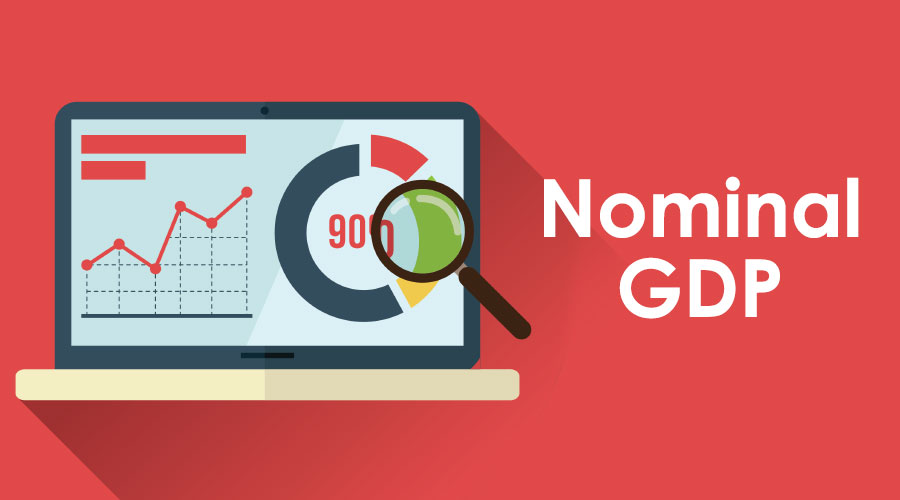
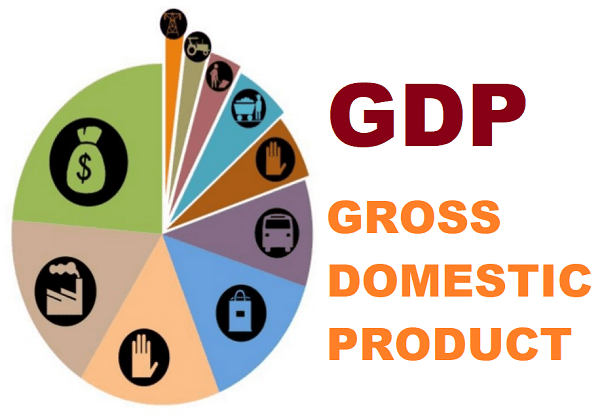
The solution is Nominal G.D.P. Nominal gross domestic product is gross domestic product (GDP) evaluated at current market prices. GDP is the monetary value of all the goods and services produced in a country. Nominal differs from real GDP in that it includes changes in prices due to inflation, which reflects the rate of price increases in an economy.

WOW! Couldn’t understand any of it!

Let me explain, Nominal G.D.P unlike real (normal) G.D.P is calculated on year to year basis. It reflects the comparison between the rise in amount of production to rise in its prices. Hence it clearly shows the rise in prices of commodities are clear but not necessarily the growth (requirement) in production.

Okay, So do we consider Nominal G.D.P in when analyzing the economy of a country?

Actually we do, if you Google for the economy of any country, there will be a clear mention of its Nominal G.D.P.

Sounds like Nominal GDP is great. Let’s remove the real (normal) GDP out of the picture. Shall we?

Well, take it easy. Nominal GDP doesn’t come without its downsides. Firstly, Nominal GDP will show you great differences when considering span of decades (real GDP doesn’t). Secondly, when an economy is mired in recession or a period of negative GDP growth. Negative nominal GDP growth could be due to a decrease in prices, called deflation. If prices declined at a greater rate than production growth, nominal GDP might reflect an overall negative growth rate in the economy. A negative nominal GDP would be signaling a recession when, in reality, production growth was positive. 

Hence when analyzing an economy we must consider both Nominal as well as Real GDP.

 I hope you liked the read, in case you didn’t I am sorry but there is no dislike button, you can always use comments though.

By Bhavik Gandhi  December 16, 2019

Why Does The Price Of Everything Rise Up So Fast?

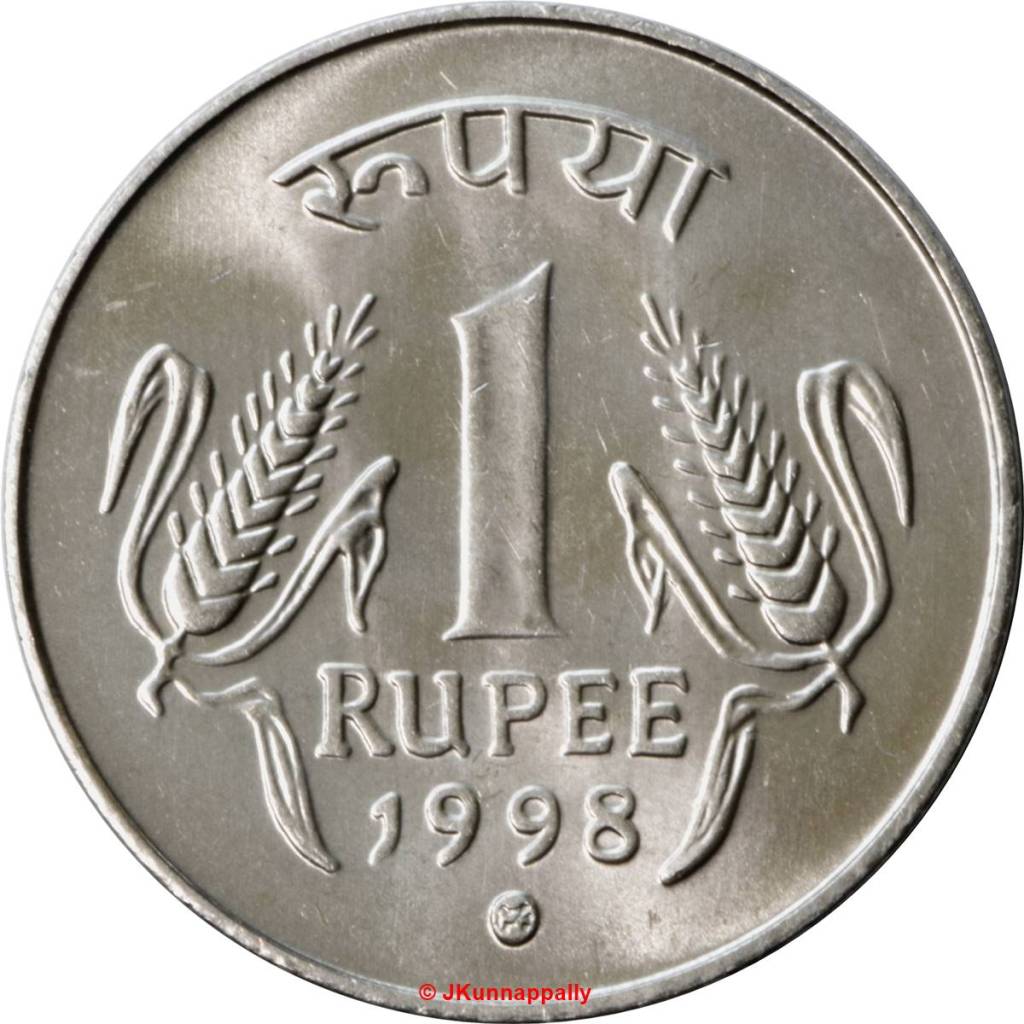
The Indian rupee

1 paisa .

1 rupee (100 paisa).

100 rupees.

1000 rupees.

1 lakh rupees (100 thousand rupees).

1 crore rupees (100 lakh rupees).

This is the hierarchy of the Indian rupee.

50 years ago 1 paisa would have bought you a candy. You could have a day’s food in 1 rupee.

Fast forward 50 years and you will not see the existence of a paisa. Even a small candy will cost you a couple rupees at the least. And a day’s food will be at least a couple hundred rupees.

So what what drove the prices by a better part of 200 times?

Its Inflation – the holy grain of modern economics (sort of).

Holy grain? Really? Price hike isn’t supposed to be a good thing right?

Well, sure but our governments strive for inflation. Why? Because Inflation is a way of showing growth. Economies of countries like India & China look for an inflation of 8-10% since last 5 years. In better words, the cost of every thing nearly doubles every 8 years. This rate attracts foreign businesses in the country in turn flourishing the countries economy.

Is that the only good thing that comes with inflation? Or are there any other reasons to consider?

Yes, there is. Recession is worse than Inflation as Inflation can be control by undertaking monetary and fiscal measures (will be mentioned in depth in further reads), dealing with recession is completely another animal.

Why so?

Recession

With Recession comes a decline in the economy. Foreign businesses prefer to take their money out of the country making many people jobless, blocking funds for government projects. Well, these are just the initials, further into a recession people start falling short of money in hand, riots take place and things get worse for all sectors. The thing to know is it is bad.

But doesn’t massive price hikes widen the gates to poverty?

Does high Inflation rate actually means high growth for people?

These and more questions will be answered in the next blog. So, stay tuned.

 I hope you liked the read, in case you didn’t I am sorry but there is no dislike button, you can always use comments though.

By Bhavik Gandhi  December 15, 2019

G.D.P: A Great Measure But No So Great Indicator

  • G.D.P – Gross Domestic Products

The 3 alphabets which generally show the progress of a country (economy) over a period of time.

So what is the meaning of Gross Domestic Products?

Gross domestic product is a monetary measure of the market value of all the final goods and services produced in a specific time period, often annually. (Wikipedia)

How is G.D.P measured?

It is measured in 3 ways

  • Total Income
  • Total Production
  • Total Expenditure

A change in G.D.P will reflect the change in economical condition of a country. Where a positive change shows growth and negative change show problems (obviously).

Sounds like a fair thing. But why did I just title it as not a good indicator?

Well let me explain.

For starters the G.D.P of a nation is calculated by the government of the respective nations. Hence, the numbers can be played up as there is no entity to cross check it.

Secondly, there is a catch in this system. For instance lets consider 2 friends (You & I).

Twin homes, London.

Let’s say we both buy houses next to each other (the houses are identical in every way). Now, we rent our houses to each other at a monthly rent of 1 million dollar (since, this is only an example). We pay each other a million every month making the result as 0(zero). We continue this for an year. Sounds meaningless right? But its not because we both just increased our G.D.P by 24 million dollars.

Well, there is a lot to rant about G.D.P as such. This blog is more about the things you will not usually read on many sites.

 I hope you liked the read, in case you didn’t I am sorry but there is no dislike button, you can always use comments though.

By Bhavik Gandhi   December 14, 2019

Money, Currency And why is the Pound So Expensive?

Before we begin to know how a currency works I would like to confuse you with some facts.

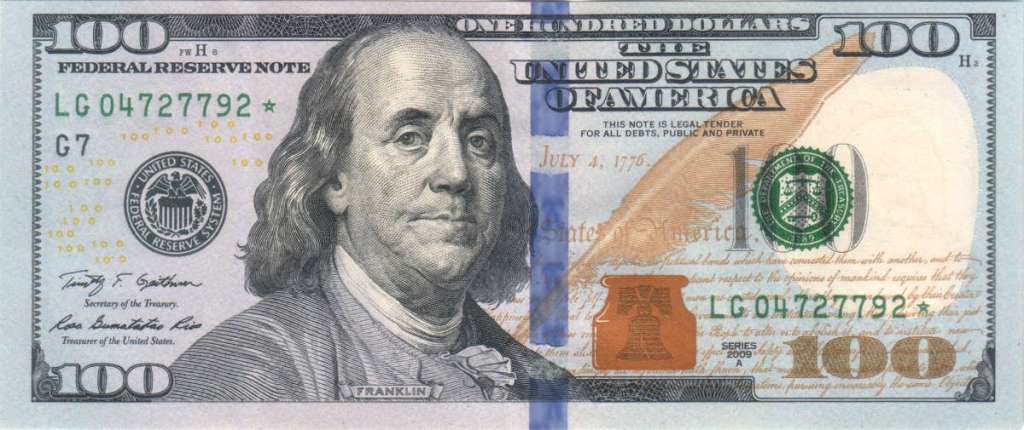
The 100 US dollar bill

This is a hundred US dollar bill and here is something weird about it.

The cost – 12.5 cents.

The purchasing power – 100 dollars.

(https://www.marketwatch.com/)

In other words, printing a 100 dollar bill requires only 12.5 cents.

So if this is the case why don’t we produce as many bills as we want? Won’t that make us all rich?

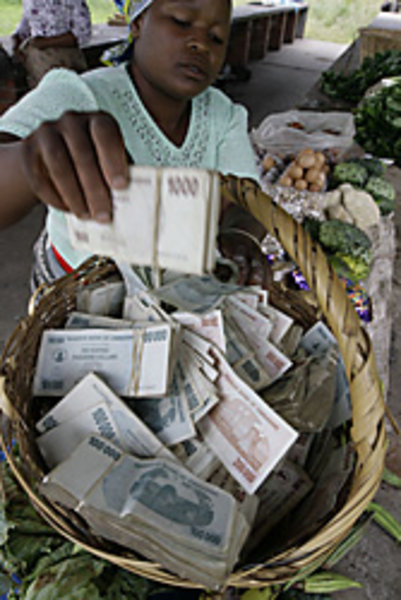
If you think this the best idea to get rich, then you should try living in Zimbabwe. Yes, you read it correct Zimbabwe tried this mentality and created a massive inflation. For instance, dinner at an average place in Zimbabwe will cost you around 151,000,000,000,000,000 (approx) Zimababwaen dollars per person. Imaging taking that much cash for a dinner.

When you have to pay 10 million for a bread

But why on earth did this even happen?

Every currency has a purchasing power of it’s own. This purchasing power depends upon the total amount of currency in the open market.

More currency in market means less purchasing power per unit and less currency in the market means more purchasing power per unit.

Still didn’t get it ?

Here’s a simple way. If you produce ‘X’ percent of more 100 dollar bill, then the new purchasing power of 100 dollar bill will be reduced by ‘X’ percents.

British Pound

This brings us to the almighty POUND. Worlds costliest currency despite of having a poor performing economy (at the time of writing). The number of pounds in an open market is so less that its purchasing power is extremely high.

How high exactly?

The 151,000,000,000,000,000 Zimababwaen dollar dinner will cost around 15 – 20 Pounds (if not less).

Honestly I can’t think of anything more for this blog. I hope you liked the read, in case you didn’t I am sorry but there is no dislike button, you can always use comments though.

By Bhavik Gandhi December 13, 2019

Economics : The basics you forget

In a nutshell Economics can be explained by 2 completely innocent words.

  • Demand
  • Supply

Demand –  Demand is the quantity of a good that consumers are willing and able to purchase at various prices during a given period of time.

Supply – Supply is the amount of a resource that firms, producers, labourers, providers of financial assets, or other economic agents are willing and able to provide to the marketplace.

The line outside any apple store at the launch of a new iPhone is the best example of demand.

But Economics isn’t only Demand & Supply it is rather the relation of both.

In a perfect Economy the amount of demand will be equal to the amount of supply. Sadly, this scenario doesn’t exists often.

A heavy supply but a lack of demand will cause a loss to the company. This is exactly what happened to Starbucks in Australia. Starbucks is probably the most scaled and popular coffee company in the world. Expecting its success to continue in Australia as well the company opened stores at every next corner but in Australia ‘George Coffee’ owns a major share of the coffee market. It is a staple for the people additionally it is more cost effective also. Hence, the initial investment of creating huge supply wasn’t appreciated by the demand, causing a major struggle for the company.

But what if the scenario is reversed ?i.e What if the demand is more than the supply ?

  • In one word it means PROFIT and big time. Since the commodity is rare, interested consumers are ready to pay more.

How can you use this to your advantage ?

  • F.Y.I you wont be the first one to think of exploiting this advantage. Companies do this all the time. From producing a limited number of cars, limited edition of bags (or anything for that matter) to having a red paint on phone.

Honestly I cant think of anything more for this blog. I hope you liked the read, in case you didn’t I am sorry but there is no dislike button, you can always use comments though.

By Bhavik Gandhi  December 12, 2019

Design a site like this with WordPress.com
Get started