Why are Bankers Richer Than You??

The title doesn’t seem like a good question?

Not a 5 star hotel, It is Mauritius Commercial Bank

Let’s consider this, all the money a bank has, comes from its costumers or the central bank(which they have to repay) yet bankers are one of the highest paid individuals in the world, the infrastructure of banks are better than majority of corporations.

Still doesn’t sound amusing?

Let’s say you are the only customer of a bank (hypothetically of course). All the money you earn goes to bank. But, over a peroid of time the bank become richer than you.

WTH

WTH? Why? How?

A bank charges its customers fees for everything( pretty much ) from transactions of huge sums, putting money in various funds( mutual funds, pension funds, etc). taking money out of the funds, online payments fees, etc.

For example – When(if) you go to a bank for investing in a mutual fund, you will be handed a books of hundreds of pages which is filled with complex economical words which look may like a witch’s spell. Here’s a free tip to cut for you through the mud, every time you see the words cost, fees(management fees, transaction fees, etc), (which will be in percentages) this is amount that will be taken from your pocket other than the actual investment. (usually ranges between 20% – 40%)

What does this mean?

This simply means that, even if all your money is lost the bank will still make a good bit depending on the amount of your investment.

  • F.Y.I the total amount in mutual funds in U.S.A alone is $5 Trillion i.e almost 5 times of Pakistan’s G.D.P ($1.202 trillion……Wikipedia).

Moreover there are interests on loans given.
Wow that sounds like a lot income for the banks.

Yes, but that’s not their biggest source of income. (According to me)

The below information is more of my personal theory (so take it with a grain of salt) and there ain’t any official numbers to this.

Let us say you live India, the INFLATION is 8% (quarterly). You keep some amount in a saving account, the interest you get is 0.4% per year (i.e 0.1 per quarter). Congrats you lost 7.9%( 8 – 0.1 =7.9) of your purchasing power every 3 months. If you put the same amount in a fixed deposit with 6% interest(usual rate) per year i.e 1.5% per quarter. You end up losing 6.5%( 8 – 1.5 =6.5) of your purchasing power. Moreover, while you have kept money, the bank gives it to others at interest rates above 12%.

And well, its not just you, there are millions who put their money in the bank.

Before I end this, I want you to think that, even after so many sources of income, how do banks show quarterly losses? Legally.

If you don’t get it. Stay tuned as this will be explain in further posts.

I hope you liked the read, in case you didn’t I am sorry but there is no dislike button, you can always use comments though.

By Bhavik Gandhi  December 12, 2019

Credit Explained: The Cost of Promises

We all love to buy new things, sometimes we pay in cash sometimes with a debit card. What if you fall short of money, but you really like that thing? You take out your credit card and swipe it, type the password and TADA!! You just bought something you didn’t have the money for.

Today, lets take a small dive into the workings of credit.

In very simple words Credit is a promise. Its a promise you make to the bank that, even though you don’t have the money right now, you will pay the money later. The bank charges you with some interest for providing this service.

Let’s say you are out to buy a furniture set for your new house. Suppose, you fall short of a 1000 dollars, so ask for credit, making a promise that you will pay 1100 dollars later (A.K.A Debt). The credit is received and you bought your dream furniture. Sound’s all right? Here’s a catch, you just paid 100 dollars extra and your furniture will not make you those 100 dollars (usually). Moreover, you have taxes to pay over it (the amount of tax feels small in this case but in a bigger scenario it becomes rather respectable).

Here’s a different example. Let’s say your monthly salary is 50000 dollars, you take an additionally credit of 10000 dollars this makes your buying capacity as 60000 dollars for the month. Suppose, you do this for 12 months (2019 – 2020). Then you will have to spend 10000 every month making your monthly buying capacity to 40000 (50000-10000 = 40000) for the year 2020 – 2021. Plus there are always taxes to make things worse. In other words, you will have to cut your standard of living.

So, is Credit bad?

Yes, if you misuse it. Let’s say you are a Youtuber buying a new desktop will increase your productivity, intern making you money. Then your use of credit is justified for buying that desktop. The same applies for a industrialist buying a new machinery, doctors buying new equipment, blah blah blah. You get the idea right?

Hence, as a general rule of thumb, I will suggest you to take credit only for something that’s going to pay you back.

With this in mind I would want you to think what are some bad credit choices you made in the past?

What about me? None, I never had a credit card.

 I hope you liked the read, in case you didn’t I am sorry but there is no dislike button, you can always use comments though.

By Bhavik Gandhi   December 17, 2019.       

Money, Currency And why is the Pound So Expensive?

Before we begin to know how a currency works I would like to confuse you with some facts.

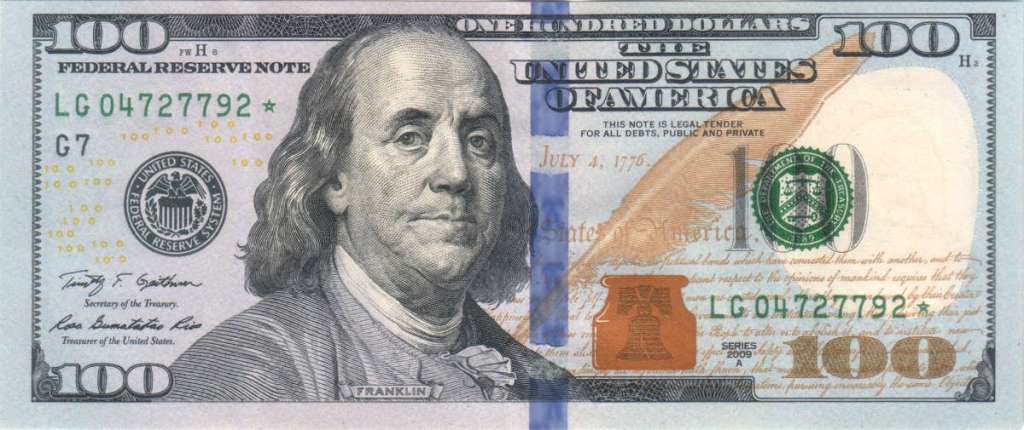
The 100 US dollar bill

This is a hundred US dollar bill and here is something weird about it.

The cost – 12.5 cents.

The purchasing power – 100 dollars.

(https://www.marketwatch.com/)

In other words, printing a 100 dollar bill requires only 12.5 cents.

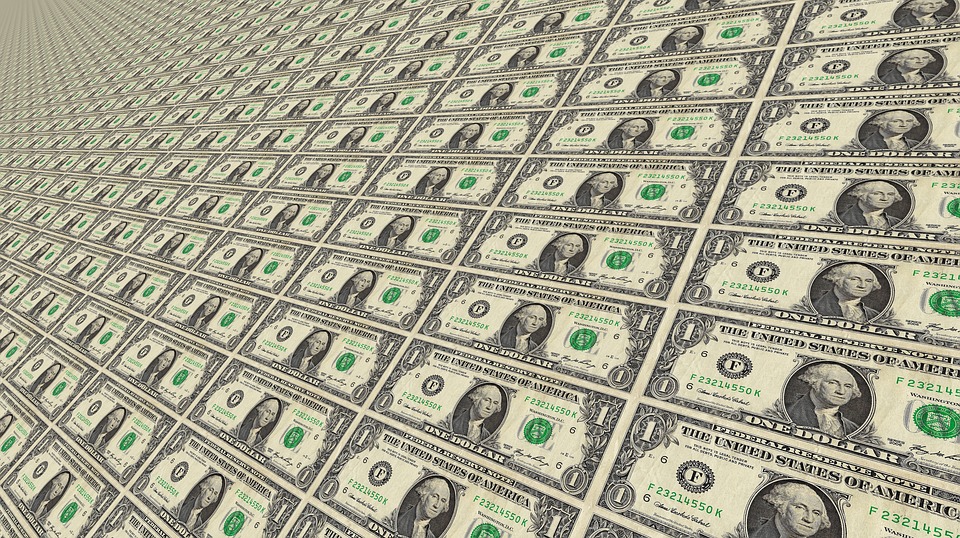
So if this is the case why don’t we produce as many bills as we want? Won’t that make us all rich?

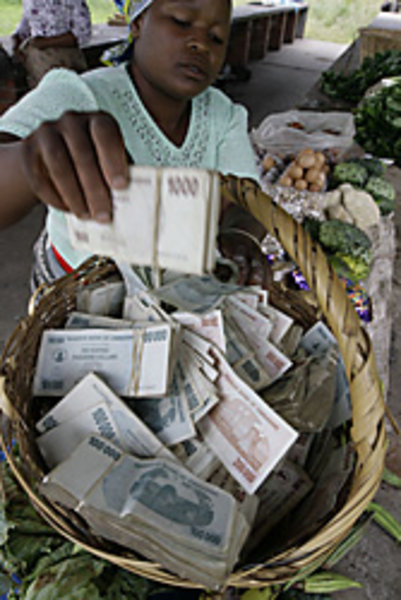
If you think this the best idea to get rich, then you should try living in Zimbabwe. Yes, you read it correct Zimbabwe tried this mentality and created a massive inflation. For instance, dinner at an average place in Zimbabwe will cost you around 151,000,000,000,000,000 (approx) Zimababwaen dollars per person. Imaging taking that much cash for a dinner.

When you have to pay 10 million for a bread

But why on earth did this even happen?

Every currency has a purchasing power of it’s own. This purchasing power depends upon the total amount of currency in the open market.

More currency in market means less purchasing power per unit and less currency in the market means more purchasing power per unit.

Still didn’t get it ?

Here’s a simple way. If you produce ‘X’ percent of more 100 dollar bill, then the new purchasing power of 100 dollar bill will be reduced by ‘X’ percents.

British Pound

This brings us to the almighty POUND. Worlds costliest currency despite of having a poor performing economy (at the time of writing). The number of pounds in an open market is so less that its purchasing power is extremely high.

How high exactly?

The 151,000,000,000,000,000 Zimababwaen dollar dinner will cost around 15 – 20 Pounds (if not less).

Honestly I can’t think of anything more for this blog. I hope you liked the read, in case you didn’t I am sorry but there is no dislike button, you can always use comments though.

By Bhavik Gandhi December 13, 2019

Design a site like this with WordPress.com
Get started